Festival lockers in the UK cost the organiser nothing when they come on revenue share: the operator delivers a self-powered locker container, runs it for the weekend and pays the festival a share of what attendees spend. Attendees pay by the hour, the four-hour block or the day, at a kiosk or by pre-booking on their phone. This guide covers the prices, hire on the day, how a 180-locker container arrives and runs, charging at multi-day events, how the organiser earns, and the planning questions to settle before the site build.
What attendees pay, and how they hire
Most UK festivals sell lockers as an add-on inside the ticket checkout, and most hire suppliers quote per event rather than publish a rate card; Lockertek, for instance, offers short and long-term event hire across the UK on a quote-only basis. So the price an attendee pays varies with the festival, the locker size and whether charging is included. Search for festival lockers hire UK and most of what comes back is suppliers asking for a quantity, a date and a duration.
LockVault, our smart-locker service, prices hire by the hour, the four-hour block and the day, and agrees the final prices with the organiser at the site survey. Three locker types carry three price points. A standard locker takes bags, jackets and valuables. A charging locker adds USB-C and USB-A ports and a Qi wireless pad and is priced above a standard one. The XL charging locker has half again the space with full charging and sits at the top of the list. Because final prices are agreed with the venue, a multi-day event can set weekend rates alongside the hourly ones, and a camping festival can price a day hire differently from a four-hour block at a city-centre show. The current guest rates are published on LockVault’s own site, lockerpay.co.uk, rather than here, because they move with the season and the site.
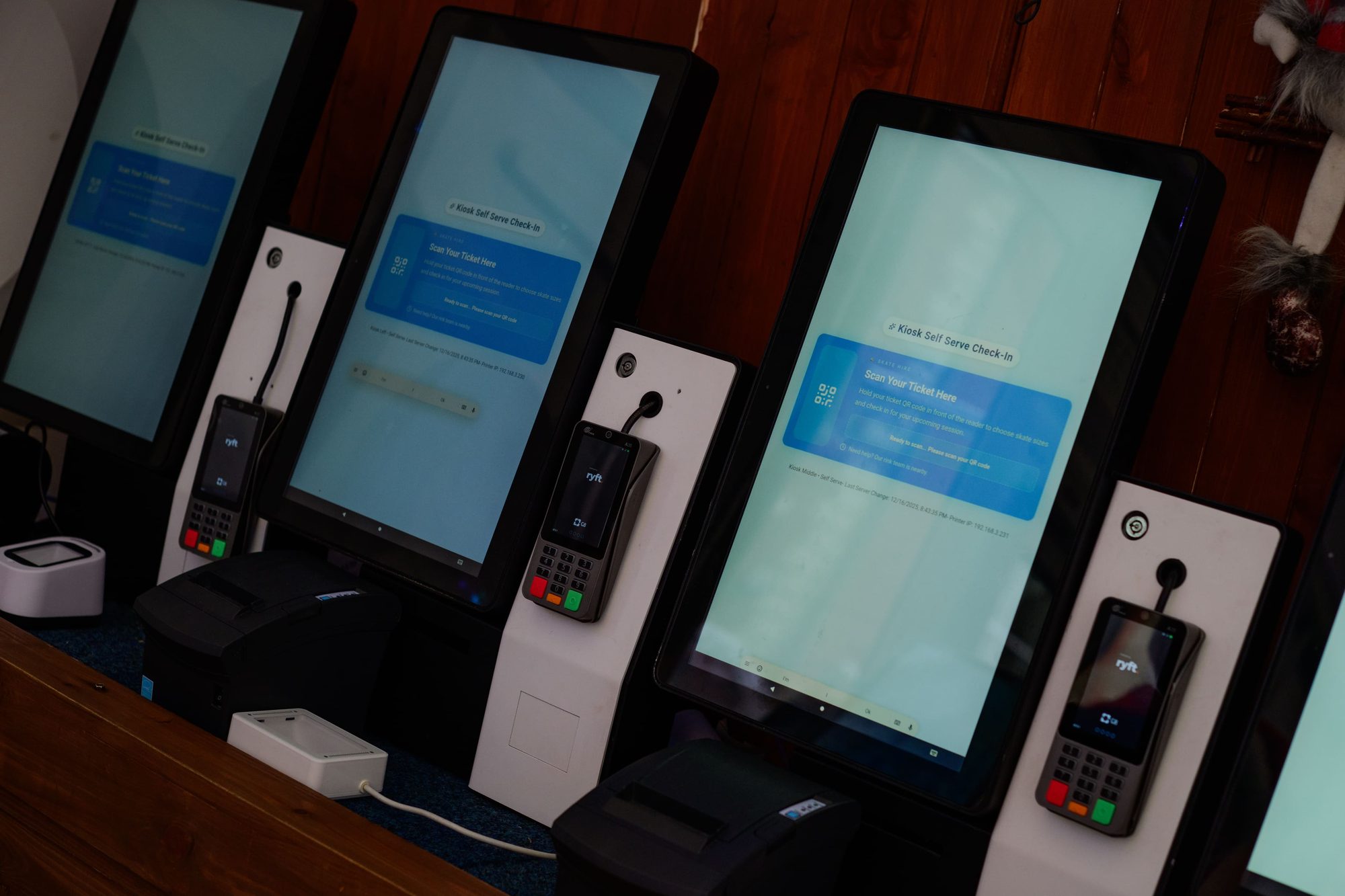
Hiring takes under 30 seconds at the touchscreen kiosk. The attendee picks a size, taps a card, Apple Pay or Google Pay, and the door opens. Lockers can also be pre-booked on a phone before the event, with a QR code scanned on arrival, which suits camping festivals where attendees arrive with their hands full. Where the festival runs cashless wristbands, the locker can be opened with the wristband, and where it runs on VenueOra ticketing the hire sits on the same record as the ticket and the bar spend.
How a 180-locker container arrives and runs
A LockVault container hub holds up to 180 lockers in four sizes: mini, small, medium and large. It arrives on a lorry and runs within hours. The roof carries solar panels that charge an on-board battery, and the connection is by Starlink, so most sites supply no mains power and no Wi-Fi. That removes two of the longest items on a festival power and data plan.
Each container handles 5,000 or more rental cycles a day, which means attendees can hire, open, close and re-open across the day without the kiosk becoming the queue. Doors are sealed and rated for splash zones, with an electromagnetic latch and a reinforced steel door, so an overnight downpour is a matter for the ground, not the lockers.
Operation is remote. LockVault monitors every door 24/7 from an operations dashboard, commits to a 99.9% uptime service level, and handles attendee support, refunds, maintenance, software updates and insurance. Your event control does not need a locker rota. For permanent sites such as arenas and showgrounds, fitted locker banks of 24 to 240 lockers do the same job without the lorry.
Charging lockers and phones at multi-day events
At a cashless festival the phone is the ticket, the wallet and the way home, and a flat battery is a welfare problem as much as an inconvenience. Festivals have answered it in two ways: power bank swaps and charging lockers. At Glastonbury in 2017, EE swapped 40,000 of its power banks over the festival; the packs were sold in advance for £19.99 with a daily swap service. Glastonbury’s 2025 packing guidance points attendees to a Vodafone battery pack collected on site and exchanged daily for a charged one.
Charging lockers take a different route: the phone sits behind a steel door while it charges, next to the bag, and comes back to its owner at full battery. LockVault’s charging variants carry USB-C, USB-A and Qi wireless pads, so no attendee needs the right cable. For a camping festival the pattern is a day hire with a top-up while the attendee eats or watches a set, repeated each day. The trade-offs between the two models, including revenue to the organiser and loss rates, are in charging lockers or power bank hire. How lockers fit with wristbands and Tap to Pay across the wider site is covered in cashless at festivals and arenas in 2026.
The organiser earns rather than pays
The traditional model is a hire fee. The organiser pays the supplier to deliver, staff and collect the lockers, and keeps whatever attendees spend, if anything. Published figures show the scale of that outlay. Julia Charles Event Management lists its staffed event locker and cloakroom unit, with two staff, from £4,480 plus VAT and travel. ChargeSpotUK’s listing on Hirespace prices an eight-locker charging station at £325 per session with delivery and pickup at £250. When London Warehouse Events moved from a built cloakroom to lockers, its co-founder wrote in Festival Insights that a Tobacco Dock show had been losing up to £4,000 a show on the cloakroom after build and staff costs, that a 5,000-capacity event’s cloakroom staffing fell from more than 20 people to six, and that the promoter bought 2,000 lockers to get there.
Revenue share removes both the fee and the purchase. LockVault funds, delivers, powers, connects, runs and maintains the lockers, and the festival receives a share of gross rental revenue, with the split agreed after a site survey. The organiser has no upfront cost and no operating cost. An itemised statement arrives on the 1st of the month and the payout follows by the 15th, with pricing reviewed once a year. A proposal comes within 48 hours of an enquiry, which matters when site plans are being signed off. How the split is set, and what to ask about term, exit, hardware and data, is set out in how locker revenue share works.
Planning questions: siting, footfall, weather and teardown
Siting. Lockers are used where attendees change state: the gate, the campsite boundary, the arena entrance, the bus and taxi pick-up. Put the container where the flow passes it on the way in and on the way out, on firm ground with open sky above the roof for the solar panels.
Footfall per container. One container is 180 lockers and 5,000 or more cycles a day. The question for the survey is how many attendees pass each pinch point and what share of them will hire; a camping event with bags and chargers converts differently from a day event in a city park. The survey sets the number of containers and the split together.
Weather. The doors are sealed and splash-rated and the container needs no cables run across the site, so the usual weather risk is access rather than the equipment. Agree the delivery route and hardstanding with your site manager.
Teardown. The container leaves on the same lorry it arrived on. Agree the collection window, how unclaimed items are logged and returned, and who holds the pre-booking data after the event. LockVault handles attendee support and refunds; the process for unclaimed items is agreed at the site survey.
What VenueOra does here
VenueOra deploys smart lockers on revenue share at festivals through LockVault, which started life inside VenueOra at festivals and became a service in its own right after two seasons of trial deployments with paying customers and repeat bookings. Festival ticketing, cashless and lockers shows how the container sits alongside wristbands and gate scanning. Revenue figures are estimates from footfall and typical conversion. The final split and forecast come from a site survey.
Sources
- Lockertek: locker hire for events for the quote-only hire model.
- Mobile News, 5 July 2017: EE swapped 40,000 power banks at Glastonbury for the 40,000 swaps and the £19.99 price.
- Glastonbury Festival, 11 June 2025: Think before you pack for the Vodafone battery pack collection and daily exchange.
- Julia Charles Event Management: Event Locker Service for the £4,480 staffed cloakroom package.
- Hirespace: ChargeSpotUK for the £325 per session and £250 delivery figures.
- Festival Insights, 10 June 2015: Making lockers the norm at UK events for the London Warehouse Events figures.