A loyalty programme for attractions rewards guests for coming back and for spending while they are there, and it works differently from the supermarket scheme in their pocket because the visit itself is the scarce event. A retailer sees a customer weekly; a zoo, a theme park or a leisure centre sees most guests a handful of times a year, in family groups, with a seasonal rhythm. The programme has to earn attention within that pattern, tie every point to a guest record and an on-site payment, and prove its worth in renewal and lifetime value rather than in sign-ups.
Why loyalty at an attraction is not retail loyalty
Retail loyalty is a crowded field. The American Express Rewards Report 2026, a survey of 4,000 UK adults commissioned by a card issuer, found that nine in ten Britons belong to at least one loyalty scheme and that the average person belongs to twelve. A points card from a visitor attraction competes for attention with eleven others, most of them used weekly.
Three things make the attraction case different. Visit frequency is low: a day visitor may come twice a year, a pass holder perhaps monthly. Points that accrue slowly over a few visits do not motivate anyone, so the reward has to be reachable within a visit or two. Guests arrive in family groups and the spend is shared: one adult pays for four tickets, lunch and a locker, so the programme has to attach to the household or the payer rather than to each individual. And demand is seasonal: school holidays and summer weekends are full regardless, so the programme’s job is to pull visits into term-time weekdays and the shoulder months, not to add more people to the August queue.
Leisure centres are the exception that shows the rule. A leisure centre loyalty scheme deals with members who visit weekly and whose churn is the problem, so it looks more like a gym retention programme than a theme park one, and rewards tied to attendance streaks and class bookings do more than rewards tied to spend.
The context is tight. ALVA’s 409 member sites recorded 165 million visits in 2025, up 2 per cent on 2024 and still 7 per cent below 2019, so growth has to come from each guest coming back and spending more rather than from more guests through the gate.
Models that fit attractions and leisure centres
Points on spend. The guest earns points on every payment, whether on tickets, food and drink, merchandise or lockers, and redeems them against the same things. It is the simplest model and the one guests understand, and it works when the earn rate makes a reward reachable in two or three visits. Redeeming on tickets is the strongest incentive to return; redeeming on food and drink is the cheapest to fund.
Tiers. Spend or visit thresholds move a guest into a tier with a standing benefit: a discount at the café, a free guest ticket, priority entry. Tiers suit pass holders, who already have a relationship with the venue and respond to recognition as much as to discounts.
Member-only events and early access. An evening opening for pass holders, first choice of slots for a Christmas event, a preview of a new exhibition. These cost little when the venue is otherwise closed or quiet, they fill shoulder periods, and they are the benefits members talk about.
Visit-based rewards. A free visit after a set number, a reward for a visit in a quiet month, a streak bonus for leisure centre members who attend every week. These are the models that move the seasonal curve.
Most venues run two of these together: points on spend for everyone and a tier or event benefit for pass holders. What pass software must do beyond single bookings covers the pass side of that pairing.
Tie it to the guest record and the till
A loyalty programme that lives in its own app, with its own account and its own card, fails at the till. The guest forgets to show it, the cashier forgets to ask, and the points never land. The programme has to be a property of the guest record that the ticketing checkout, the gate scanner and the ePOS already read.
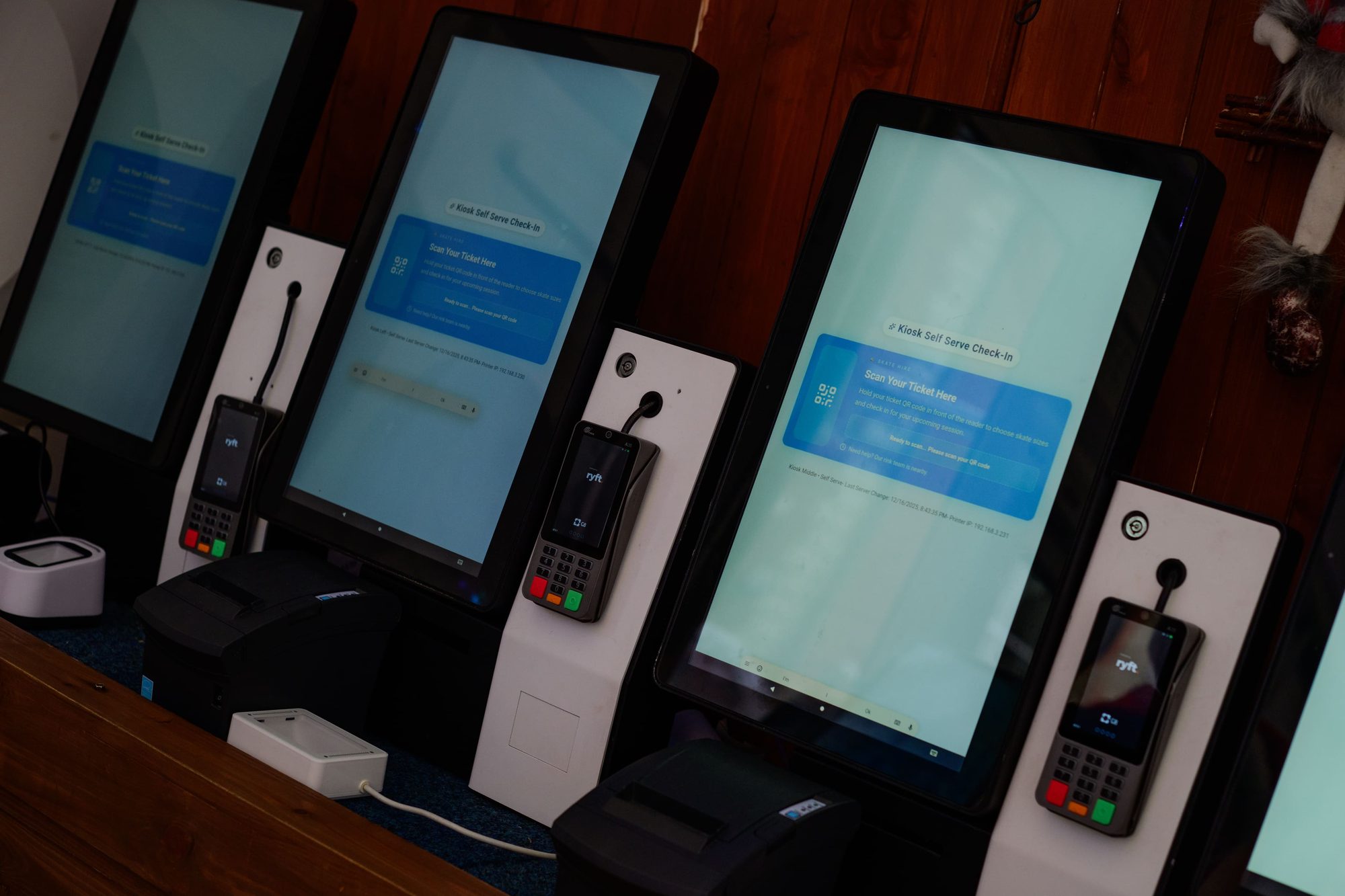
In practice that means three things. First, one identifier for the guest across channels: the same account buys the ticket, holds the pass and earns the points, whether the payment is online or at a till. Second, the till knows the guest. A scanned pass, a wallet pass or a card linked to the account at a bar, café or shop earns points at the moment of payment and applies a member discount without a second step. Third, redemption is a payment method. Points come off the bill at the till or the checkout like a voucher, and the ledger records both the sale and the redemption so finance can see what the programme costs.
Cashless settings make this easier. Where a festival or arena runs on wristbands or Tap to Pay, every purchase is already a record against an identifier; the guide to cashless at festivals and arenas describes how that ledger works, and a points scheme would earn and redeem against the same ledger.
Measuring lifetime value and renewal
Sign-ups are the wrong measure. Most schemes report members enrolled, and that number rises forever without telling the venue anything. The measures that matter are behavioural.
Lifetime value per guest is the sum of ticket, pass and on-site spend over the relationship, and the test is whether members have a higher value than comparable non-members once the cost of rewards is taken off. Visit frequency per member against a matched group of non-members shows whether the programme moves visits, and when. Renewal rate for pass holders in the programme against pass holders outside it is the number that justifies the budget, because a pass renewal is worth far more than any single redemption. Redemption rate and breakage, meaning points earned and never used, show whether the rewards are reachable; a very low redemption rate means the earn rate is too mean, and the liability on unredeemed points still has to be carried.
All of this depends on the data being in one place. Renewal rate by join month, value per member and visits per member are straightforward where tickets, passes, visits and payments share a record, and nearly impossible where they do not. The reporting a venue should expect from its platform is described in what attraction management software covers.
Pitfalls
The common failures are predictable. An earn rate so low that a family needs six visits for a coffee. Rewards that can only be redeemed in peak periods, when the venue least needs the visit. A programme that cannot be used by the person who pays for the family. A separate app that nobody installs. Rewards funded from the café margin without the café manager’s agreement. A launch without a renewal and lifetime value baseline, so nobody can later say whether it worked. And a scheme so generous to pass holders that the day ticket, which most guests buy, feels like second class.
Plan the measurement first, the earn and burn rates second and the launch third.
What VenueOra does here
VenueOra does not run a points scheme. What it brings to a loyalty programme is the membership system and the tools around it: annual and monthly plans priced by the venue, applications with staff review, invite codes for referrals, members-only ticket types so a benefit can be a ticket nobody else can buy, discount codes with campaign URLs for a quiet-month offer, guest day passes for selected events, and renewal reminders with lifecycle emails for due, lapsed and win-back members. Email campaigns go to audiences built from members, ticket buyers, events or saved segments, and reports cover sales, VAT, year-on-year comparison and daily capacity. The leisure centres and trusts page covers how this fits a member-based centre.
Sources
- InternetRetailing, reporting the American Express Rewards Report 2026, 10 September 2026 for UK loyalty scheme membership figures. The report is commissioned by a card issuer.
- ICOM UK, reporting ALVA’s 2025 visitor figures, March 2026 for the visit numbers.